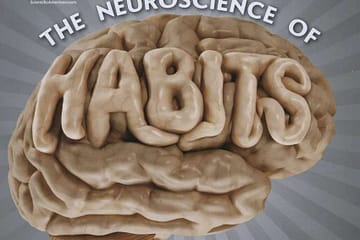
Good habits, bad habits

Author: Graybiel, AM; Smith, KS Description: Every day we all engage in a surprising number of habitual behaviors. Many of them, from brushing our teeth to driving a familiar route, simply allow us to do certain things on autopilot so that our brains are not overtaxed by concentrating on each brushstroke and countless tiny adjustments of the steering wheel. Other habits, such as jogging, may help keep us healthy. Regularly popping treats from the candy dish may not. And habits that wander into the territory of compulsions or addictions, such…

See more and a link to full text

Cleaning the scientific house: Rebuilding trust in science requires confronting the harms of ghostwriting

Author: Oreskes, N Description: “Consider the problem of ghostwriting in science. Recently, a colleague and I published a paper analyzing the impacts of a peer-reviewed paper, published in 2000, that purported to be an independent, objective, and comprehensive review of the safety of the pesticide, glyphosate. The paper found no convincing evidence for toxicity, genotoxicity, carcinogenicity, or endocrine disruption. However, documents made public through legal proceedings in 2017 showed that the paper was not, in fact, independent, but had been conceptualized and largely written by Monsanto employees. We wanted to…

See more and a link to full text

What should be done to tackle ghostwriting in the medical literature?

Author: Gotzsche, PC; Kassirer, JP; Woolley, KL; Wager, E; Jacobs, A; Gertel, A; Hamilton, C Description: Ghostwriting occurs when someone makes substantial contributions to a manuscript without attribution or disclosure. It is considered bad publication practice in the medical sciences, and some argue it is scientific misconduct. At its extreme, medical ghostwriting involves pharmaceutical companies hiring professional writers to produce papers promoting their products but hiding those contributions and instead naming academic physicians or scientists as the authors. To improve transparency, many editors’ associations and journals allow professional medical writers…

See more and a link to full text

Is artificial intelligence a good servant but a bad master?

Author: Lakhtakia, Akhlesh; Lakhtakia, Natalya S. Description: Artificial intelligence (AI) is rapidly moving from a specialized research topic into a widely deployed general-purpose technology, driven by advances in transformer-based architectures, convincing enough productivity gains, large private investment, geopolitical competition, and expanding educational adoption. AI comprises two distinct sets of methodologies: (i) predictive AI, which is grounded in statistical inference and aims to model measurable physical reality, and (ii) generative AI, which produces plausible synthetic content without intrinsic verification against physical reality. Whereas predictive AI can strengthen human decision-making through rigorously…

See more and a link to full text

The Dark Side of AI: A Human and Societal Perspective

Author: Shafik, Wasswa Description: This book addresses how the growth of AI could undermine fundamental human values such as privacy, security, employment, and democracy. It emphasizes the critical challenges that arise when artificial intelligence technologies operate without proper ethical oversight or regulation. Key topics include AI’s potential for surveillance, the manipulation of media through deepfakes, autonomous weapons, and job displacement, as well as the growing concerns around algorithmic biases that may perpetuate social inequalities and harm marginalized communities. It offers insights into how AI can be integrated into society responsibly,…

See more and a link to full text

Large language models (LLMs) and the institutionalization of misinformation

Author: Garry, M; Chan, WM; Foster, J; Henkel, LA Description: Large language models (LLMs), such as ChatGPT, flood the Internet with true and false information, crafted and delivered with techniques that psychological science suggests will encourage people to think that information is true. What’s more, as people feed this misinformation back into the Internet, emerging LLMs will adopt it and feed it back in other models. Such a scenario means we could lose access to information that helps us tell what is real from unreal – to do ‘reality monitoring.’…

See more and a link to full text

Insinuation Anxiety: Concern That Advice Rejection Will Signal Distrust After Conflict of Interest Disclosures

Author: Sah, S; Loewenstein, G; Cain, DM Description: When expert advisors have conflicts of interest, disclosure is a common regulatory response. In four experiments (three scenario experiments involving medical contexts, and one field experiment involving financial consequences for both parties), we show that disclosure of a financial or nonfinancial conflict of interest can have a perverse effect on the advisor-advisee relationship. Disclosure, perhaps naturally, decreases an advisee’s trust in the advice. But disclosure can also lead to concern that failure to follow advice will be interpreted as a signal of…

See more and a link to full text

The burden of disclosure: increased compliance with distrusted advice

Author: Sah, S; Loewenstein, G; Cain, DM Description: Professionals often face conflicts of interest that give them an incentive to provide biased advice, and disclosure (informing advisees about the conflict) is frequently proposed as a solution to the problem. We present 6 experiments that reveal a previously unrecognized perverse effect of disclosure: Although disclosure can decrease advisees’ trust in the advice, it can also increase pressure to comply with that advice if advisees feel obliged to satisfy their advisors’ personal interests. Hence, disclosure can burden those it is ostensibly intended…

See more and a link to full text

Fooled twice: People cannot detect deepfakes but think they can

Author: Köbis, NC; Doležalová, B; Soraperra, I Description: Hyper-realistic manipulations of audio-visual content, i.e., deepfakes, present new challenges for establishing the veracity of online content. Research on the human impact of deepfakes remains sparse. In a pre-registered behavioral experiment (N = 210), we show that (1) people cannot reliably detect deepfakes and (2) neither raising awareness nor introducing financial incentives improves their detection accuracy. Zeroing in on the underlying cognitive processes, we find that (3) people are biased toward mistaking deepfakes as authentic videos (rather than vice versa) and (4) they…

See more and a link to full text

Clinical Pharmacokinetics of Semaglutide: A Systematic Review

Author: Yang, XD; Yang, YY Description: PURPOSE: The aim of this review was to provide all the pharmacokinetic data for semaglutide in humans concerning its pharmacokinetics after subcutaneously and oral applications in healthy and diseased populations, to provide recommendations for clinical use. METHODOLOGY: The PubMed and Embase databases were searched to screen studies associated with the pharmacokinetics of semaglutide. The pharmacokinetic parameters included area under the curve plasma concentrations (AUC), maximal plasma concentration (C(max)), time to C(max), half-life (t(1/2)), and clearance. The systematic literature search retrieved 17 articles including data…

See more and a link to full text
Creative Commons License
This work is licensed under a Creative Commons Attribution-NonCommercial 4.0 International License.