Association Between Ambient Air Pollution and Attention-Deficit/Hyperactivity Disorder (ADHD) in Children: A Systematic Review and Meta-Analysis

Author: Ahmad, S; K G, N; Mani Babu A; Ranjan, R; Kumar, P Description: The objective of this systematic review and meta-analysis was to assess the association between postnatal exposure to ambient air pollutants (particulate matter (PM)(2.5), PM(10), nitrogen dioxide (NO(2))) and the risk of attention-deficit/hyperactivity disorder (ADHD) in children. Observational studies, including cohort, case-control, and cross-sectional designs, that examined the relationship between postnatal exposure to ambient air pollution and ADHD in children were included, while studies focusing on prenatal exposure or unrelated neurodevelopmental outcomes were excluded. A comprehensive search…

See more and a link to full text

Ambient Air Pollution and Parkinson’s Disease and Alzheimer’s Disease: An Updated Meta-Analysis

Author: Xie, C; Xia, X; Wang, K; Yan, J; Bai, L; Guo, L; Li, X; Wu, S Description: BACKGROUND: Previous epidemiological evidence regarding the associations between ambient air pollution and two major neurodegenerative diseases, Alzheimer’s disease (AD) and Parkinson’s disease (PD), remains inconclusive. OBJECTIVE: This study aimed to evaluate the associations between long-term and short-term exposure to PM(2.5) and PM(10) (i.e., particulate matter with an aerodynamic diameter of, or smaller than, 2.5 mum or 10 mum), nitrogen dioxide (NO(2)), ozone, sulfur dioxide, and carbon monoxide and the risks of AD…

See more and a link to full text

Health Benefits from Nature Experiences Depend on Dose

Author: Shanahan, DF; Bush, R; Gaston, KJ; Lin, BB; Dean, J; Barber, E; Fuller, RA Description: Nature within cities will have a central role in helping address key global public health challenges associated with urbanization. However, there is almost no guidance on how much or how frequently people need to engage with nature, and what types or characteristics of nature need to be incorporated in cities for the best health outcomes. Here we use a nature dose framework to examine the associations between the duration, frequency and intensity of exposure…

See more and a link to full text

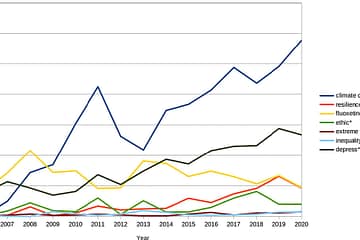
Climate Change, Pollution, Deforestation, and Mental Health: Research Trends, Gaps, and Ethical Considerations

Author: Wigand, ME; Timmermann, C; Scherp, A; Becker, T; Steger, F Description: Climate change, pollution, and deforestation have a negative impact on global mental health. There is an environmental justice dimension to this challenge as wealthy people and high-income countries are major contributors to climate change and pollution, while poor people and low-income countries are heavily affected by the consequences. Using state-of-the art data mining, we analyzed and visualized the global research landscape on mental health, climate change, pollution and deforestation over a 15-year period. Metadata of papers were exported…

See more and a link to full text

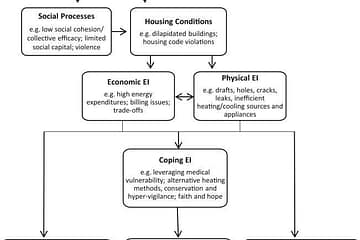
Energy insecurity: a framework for understanding energy, the built environment, and health among vulnerable populations in the context of climate change

Author: Hernandez, D Description: The recent occurrence of Hurricane Sandy and other climate change-related calamities prompt us to consider the significance of public health in the aftermath of disaster. However, the field of public health also has a role to play in the awareness, preparedness, and deterrence of environmental factors that affect vulnerable populations on a daily basis. The growing incidence of extreme weather events attributable to climate change and the parallel surge in energy prices trickle down to formidable health impacts that may prove especially detrimental to vulnerable populations….

See more and a link to full text

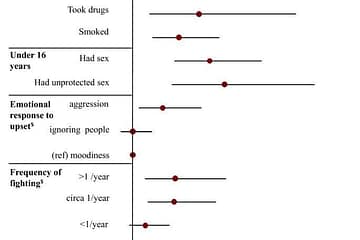
Early pubertal onset and its relationship with sexual risk taking, substance use and anti-social behaviour: a preliminary cross-sectional study

Author: Downing, J; Bellis, MA Description: BACKGROUND: In many countries age at pubertal onset has declined substantially. Relatively little attention has been paid to how this decline may affect adolescent behaviours such as substance use, violence and unprotected sex and consequently impact on public health. METHODS: In the UK, two opportunistic samples (aged 16-45 years), paper-based (n = 976) and online (n = 1117), examined factors associated with earlier pubertal onset and whether earlier age of onset predicted sexual risk-taking, substance use and anti-social behaviours during early adolescence. RESULTS: Overall,…

See more and a link to full text

The role of explicit and implicit self-esteem in peer modeling of palatable food intake: a study on social media interaction among youngsters

Author: Bevelander, KE; Anschutz, DJ; Creemers, DH; Kleinjan, M; Engels, RC Description: OBJECTIVE: This experimental study investigated the impact of peers on palatable food intake of youngsters within a social media setting. To determine whether this effect was moderated by self-esteem, the present study examined the roles of global explicit self-esteem (ESE), body esteem (BE) and implicit self-esteem (ISE). METHODS: Participants (N = 118; 38.1% boys; M age 11.14+/-.79) were asked to play a computer game while they believed to interact online with a same-sex normal-weight remote confederate (i.e., instructed…

See more and a link to full text

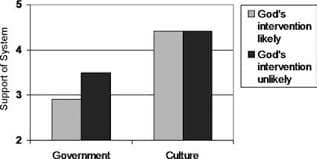
For God (or) country: the hydraulic relation between government instability and belief in religious sources of control

Author: Kay, AC; Shepherd, S; Blatz, CW; Chua, SN; Galinsky, AD Description: It has been recently proposed that people can flexibly rely on sources of control that are both internal and external to the self to satisfy the need to believe that their world is under control (i.e., that events do not unfold randomly or haphazardly). Consistent with this, past research demonstrates that, when personal control is threatened, people defend external systems of control, such as God and government. This theoretical perspective also suggests that belief in God and support…

See more and a link to full text

Investigating multiple components of attitude, subjective norm, and perceived control: an examination of the theory of planned behaviour in the exercise domain

Author: Rhodes, RE; Courneya, KS Description: The presence of two subcomponents within each theory of planned behaviour (TPB) concept of attitude (affective and instrumental), subjective norm (injunctive and descriptive), and PBC (self-efficacy and controllability) has been widely supported. However, research has not examined whether the commonality of variance between these components (i.e. a general factor) or the specificity of variance within the subcomponents influences intention and behaviour. Therefore, the purpose of this study was to examine the optimal conceptualization of either two subcomponents or a general common factor for each…

See more and a link to full text
Social Anxiety, Stress Type, and Conformity among Adolescents

Author: Zhang, P; Deng, Y; Yu, X; Zhao, X; Liu, X Description: Social anxiety and stress type can influence strong conformity among adolescents; however, the interaction between them is not clear. In this study, 152 adolescents were recruited and assigned one of two conditions: an interaction and a judgment condition. In the interaction condition, adolescents with high social anxiety (HSA) were less likely to conform when completing a modified Asch task, compared to adolescents who had low social anxiety. In the judgment condition, adolescents with HSA were more likely to…

See more and a link to full text
Creative Commons License
This work is licensed under a Creative Commons Attribution-NonCommercial 4.0 International License.