Diet-induced obesity in female mice leads to offspring hyperphagia, adiposity, hypertension, and insulin resistance: a novel murine model of developmental programming

Author: Samuelsson, Anne-Maj; Matthews, Phillippa A.; Argenton, Marco; Christie, Michael R.; McConnell, Josie M.; Jansen, Eugene H. J. M.; Piersma, Aldert H.; Ozanne, Susan E.; Twinn, Denise Fernandez; Remacle, Claude; Rowlerson, Anthea; Poston, Lucilla; Taylor, Paul D. Description: Maternal obesity is increasingly prevalent and may affect the long-term health of the child. We investigated the effects of maternal diet-induced obesity in mice on offspring metabolic and cardiovascular function. Female C57BL/6J mice were fed either a standard chow (3% fat, 7% sugar) or a palatable obesogenic diet (16% fat, 33% sugar)…

See more and a link to full text

Laboratory Determined Sugar Content and Composition of Commercial Infant Formulas, Baby Foods and Common Grocery Items Targeted to Children

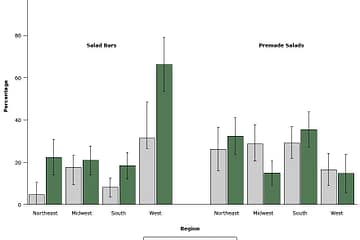
Author: Walker, Ryan W.; Goran, Michael I. Description: Excess added sugar consumption is tied to poor health outcomes in children. The sugar content of beverages and foods children are exposed to is mostly unknown, yet this information is imperative for understanding potential risks from overconsumption of sugars in early life. We determined actual sugar content by conducting a blinded laboratory analysis in infant formulas, breakfast cereals, packaged baked goods and yogurts. One hundred samples were sent to an independent laboratory for analysis via gas chromatography. Sugar content and composition was…

See more and a link to full text

Third-party social interaction and word learning from video

Author: O’Doherty, K.; Troseth, G.L.; Shimpi, P.M.; Goldenberg, E.; Akhtar, N.; Saylor, M.M. Description: In previous studies, very young children have learned words while “overhearing” a conversation, yet they have had trouble learning words from a person on video. In Study 1, 64 toddlers (mean age=29.8 months) viewed an object-labeling demonstration in 1 of 4 conditions. In 2, the speaker (present or on video) directly addressed the child, and in 2, the speaker addressed another adult who was present or was with her on video. Study 2 involved 2 follow-up…

See more and a link to full text

Effects of restriction on children’s intake differ by child temperament, food reinforcement, and parent’s chronic use of restriction

Author: Rollins, B.Y.; Loken, E.; Savage, J.S.; Birch, L.L. Description: Parents’ use of restrictive feeding practices is counterproductive, increasing children’s intake of restricted foods and risk for excessive weight gain. The aims of this research were to replicate Fisher and Birch’s (1999b) original findings that short-term restriction increases preschool children’s (3-5 y) selection, intake, and behavioral response to restricted foods, and to identify characteristics of children who were more susceptible to the negative effects of restriction. The experiment used a within-subjects design; 37 children completed the food reinforcement task and…

See more and a link to full text
Cognitive Behavioral Therapy in Children with Anxiety

Attention bias modification treatment augmenting effects on cognitive behavioral therapy in children with anxiety: randomized controlled trial

Author: Shechner, T.; Rimon-Chakir, A.; Britton, J.C.; Lotan, D.; Apter, A.; Bliese, P.D.; Pine, D.S.; Bar-Haim, Y. Description: OBJECTIVE: Attention bias modification treatment (ABMT) is a promising novel treatment for anxiety disorders, but clinical trials have focused largely on stand-alone formats among adults. This randomized controlled trial examined the augmenting effects of threat-based ABMT on cognitive behavioral therapy (CBT) in clinically anxious youth. METHOD: Sixty-three treatment-seeking children with anxiety disorder were randomly assigned to 1 of the following 3 treatment groups: ABMT + CBT; ABMT placebo + CBT; and CBT-alone….

See more and a link to full text
Parent discipline practices in an international sample

Parent discipline practices in an international sample: associations with child behaviors and moderation by perceived normativeness

Author: Gershoff, E.T.; Grogan-Kaylor, A.; Lansford, J.E.; Chang, L.; Zelli, A.; Deater-Deckard, K.; Dodge, K.A. Description: This study examined the associations of 11 discipline techniques with children’s aggressive and anxious behaviors in an international sample of mothers and children from 6 countries and determined whether any significant associations were moderated by mothers’ and children’s perceived normativeness of the techniques. Participants included 292 mothers and their 8- to 12-year-old children living in China, India, Italy, Kenya, Philippines, and Thailand. Parallel multilevel and fixed effects models revealed that mothers’ use of corporal…

See more and a link to full text

Early-life social experiences in mice affect emotional behaviour and hypothalamic-pituitary-adrenal axis function

Author: Ros-Simo, C.; Valverde, O. Description: RATIONALE: Early-life stressful experiences are associated to alterations in behavioural responses and development of psychiatric and neurodegenerative diseases. In rodents, individual housing is considered as a stressful condition whilst enriched environment can protect against stress and its negative consequences. Neuroendocrine responses to stress can also be altered by early-life experiences and seem to contribute to behavioural alterations induced by changes in housing conditions. OBJECTIVE: To develop an improved procedure of social isolation throughout development (from pre-adolescence to adulthood) in CD1 mice and to elucidate…

See more and a link to full text

Improvements and Disparities in Types of Foods and Milk Beverages Offered in Elementary School Lunches, 2006-2007 to 2013-2014

Author: Turner, L.; Ohri-Vachaspati, P.; Powell, L.; Chaloupka, F.J. Description: INTRODUCTION: Children consume much of their daily energy intake at school. School district policies, state laws, and national policies, such as revisions to the US Department of Agriculture’s school meals standards, may affect the types of foods and beverages offered in school lunches over time. METHODS: This study evaluated changes and disparities in school lunch characteristics from 2006-2007 to 2013-2014. Data were obtained from annual cross-sectional surveys at 4,630 public elementary schools participating in the National School Lunch Program. Multivariate…

See more and a link to full text

Mindful Parenting in Mental Health Care

Author: Bogels, S.M.; Lehtonen, A.; Restifo, K. Description: Mindfulness is a form of meditation based on the Buddhist tradition, which has been used over the last two decades to successfully treat a multitude of mental health problems. Bringing mindfulness into parenting (“mindful parenting”) is one of the applications of mindfulness. Mindful parenting interventions are increasingly being used to help prevent and treat mental disorders in children, parenting problems, and prevent intergenerational transmission of mental disorders from parents to children. However, to date, few studies have examined the hypothesized mechanisms of…

See more and a link to full text

Language proficiency and executive control in proactive interference: evidence from monolingual and bilingual children and adults

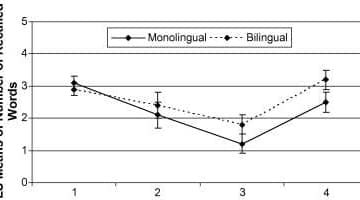
Author: Bialystok, E.; Feng, X. Description: Two studies are reported in which monolingual and bilingual children (Study 1) and adults (Study 2) completed a memory task involving proactive interference. In both cases, the bilinguals attained lower scores on a vocabulary test than monolinguals but performed the same on the proactive interference task. For the children, bilinguals made fewer intrusions from previous lists even though they recalled the same number of words. For the adults, bilinguals recalled more words than monolinguals when the scores were corrected for differences in vocabulary. In…

See more and a link to full text
Creative Commons License
This work is licensed under a Creative Commons Attribution-NonCommercial 4.0 International License.