Is the oxidative stress theory of aging dead?

Author: Perez, V.I.; Bokov, A.; Van Remmen, H.; Mele, J.; Ran, Q.; Ikeno, Y.; Richardson, A. Description: Currently, the oxidative stress (or free radical) theory of aging is the most popular explanation of how aging occurs at the molecular level. While data from studies in invertebrates (e.g., C. elegans and Drosophila) and rodents show a correlation between increased lifespan and resistance to oxidative stress (and in some cases reduced oxidative damage to macromolecules), direct evidence showing that alterations in oxidative damage/stress play a role in aging are limited to a…

See more and a link to full text
Early-life social experiences in mice affect emotional behaviour and hypothalamic-pituitary-adrenal axis function

Author: Ros-Simo, C.; Valverde, O. Description: RATIONALE: Early-life stressful experiences are associated to alterations in behavioural responses and development of psychiatric and neurodegenerative diseases. In rodents, individual housing is considered as a stressful condition whilst enriched environment can protect against stress and its negative consequences. Neuroendocrine responses to stress can also be altered by early-life experiences and seem to contribute to behavioural alterations induced by changes in housing conditions. OBJECTIVE: To develop an improved procedure of social isolation throughout development (from pre-adolescence to adulthood) in CD1 mice and to elucidate…

See more and a link to full text

Temperament and stress resilience in school-age children: a within-families study

Author: Smith, J., & Prior, M. Description: OBJECTIVE: Stress resilience was assessed in 81 school-age children, from within 32 families acknowledging severe psychosocial stress. Resilient and nonresilient children, identified via competence and behavior disorder measures from school and home, were compared. METHOD: Parents and teachers completed questionnaires and rating scales, and children were observed and assessed at home on attributes of temperament, self-esteem, ability, gender, and mother-child warmth. RESULTS: Individual differences in child and family attributes that were predictive of competent child functioning varied according to the outcome measure used….

See more and a link to full text

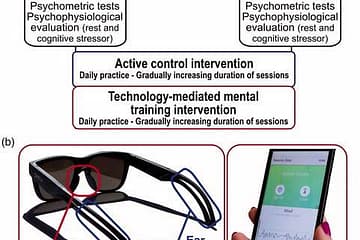
Effects of technology-mediated mindfulness practice on stress: psychophysiological and self-report measures

Author: Balconi, M., Fronda, G., & Crivelli, D. Description: Repeated exposure to stressors, even if mild, may alter the efficiency of optimal stress responses and hinder emotion regulation skills. Mindfulness meditation, by strengthening self-regulation and awareness, may optimize the efficiency of physiological, cognitive, and behavioral reactions to stressful events but typically requires notable commitment to practice, which often leads to disengagement. Recent research suggested that such practices may be made more accessible and that the potential for self-enhancement and stress management of meditation might be improved by supporting mental training…

See more and a link to full text

Association Between Generalized Anxiety Disorder Scores and Online Activity Among US Adults During the COVID-19 Pandemic: Cross-Sectional Analysis

Author: Singh, P., Cumberland, W. G., Ugarte, D., Bruckner, T.-A., & Young, S. D. Description: BACKGROUND: Evidence from past pandemics suggests that fear, uncertainty, and loss of control during large-scale public health crises may lead to increased pandemic-related information seeking, particularly among persons predisposed to high anxiety. In such groups, a greater consumption of information pertaining to the COVID-19 pandemic may increase anxiety. OBJECTIVE: In this study, we examine the association between online activity and Generalized Anxiety Disorder 7 (GAD-7) scores in the United States. METHODS: We recruited participants for…

See more and a link to full text

Reduced reward-driven eating accounts for the impact of a mindfulness-based diet and exercise intervention on weight loss: Data from the SHINE randomized controlled trial

Author: Mason, A.E.; Epel, E.S.; Aschbacher, K.; Lustig, R.H.; Acree, M.; Kristeller, J.; Cohn, M.; Dallman, M.; Moran, P.J.; Bacchetti, P.; Laraia, B.; Hecht, F.M.; Daubenmier, J. Description: Many individuals with obesity report over-eating despite intentions to maintain or lose weight. Two barriers to long-term weight loss are reward-driven eating, which is characterized by a lack of control over eating, a preoccupation with food, and a lack of satiety; and psychological stress. Mindfulness training may address these barriers by promoting awareness of hunger and satiety cues, self-regulatory control, and stress…

See more and a link to full text
Creative Commons License
This work is licensed under a Creative Commons Attribution-NonCommercial 4.0 International License.