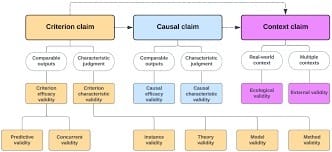
Validity in Design Science

Author: Larsen, K.; Lukyanenko, R.; Mueller, Roland M.; Storey, V.; Parsons, J.; Vandermeer, D.; Hovorka, D. Description: Researchers must ensure that the claims about the knowledge produced by their work are valid. However, validity is neither well-understood nor consistently established in design science, which involves the development and evaluation of artifacts (models, methods, instantiations, and theories) to solve problems. As a result, it is challenging to demonstrate and communicate the validity of knowledge claims about artifacts. This paper defines validity in design science and derives the Design Science Validity Framework…

See more and a link to full text

Sycophantic AI Decreases Prosocial Intentions and Promotes Dependence

Author: Cheng, Myra; Lee, Cinoo; Khadpe, Pranav; Yu, Sunny; Han, Dyllan; Jurafsky, Dan Description: Both the general public and academic communities have raised concerns about sycophancy, the phenomenon of artificial intelligence (AI) excessively agreeing with or flattering users. Yet, beyond isolated media reports of severe consequences, like reinforcing delusions, little is known about the extent of sycophancy or how it affects people who use AI. Here we show the pervasiveness and harmful impacts of sycophancy when people seek advice from AI. First, across 11 state-of-the-art AI models, we find that…

See more and a link to full text

Do AI chatbots improve students learning outcomes? Evidence from a meta-analysis

Author: Wu, R., & Yu, Z. Description: Artificial intelligence (AI) chatbots are gaining increasing popularity in education. Due to their increasing popularity, many empirical studies have been devoted to exploring the effects of AI chatbots on students’ learning outcomes. The proliferation of experimental studies has highlighted the need to summarize and synthesize the inconsistent findings about the effects of AI chatbots on students’ learning outcomes. However, few reviews focused on the meta-analysis of the effects of AI chatbots on students’ learning outcomes. The present study performed a meta-analysis of 24…

See more and a link to full text

Countering AI-generated misinformation with pre-emptive source discreditation and debunking

Author: Spearing, Emily R.; Gile, Constantina I.; Fogwill, Amy L.; Prike, Toby; Swire-Thompson, Briony; Lewandowsky, Stephan; Ecker, Ullrich K. H. Description: Despite widespread concerns over AI-generated misinformation, its impact on people’s reasoning and the effectiveness of countermeasures remain unclear. This study examined whether a pre-emptive, source-focused inoculation–designed to lower trust in AI-generated information–could reduce its influence on reasoning. This approach was compared with a retroactive, content-focused debunking, as well as a simple disclaimer that AI-generated information may be misleading, as often seen on real-world platforms. Additionally, the extent to which…

See more and a link to full text

Halt the use of facial-recognition technology until it is regulated

Author: Crawford, Kate Description: Until appropriate safeguards are in place, we need a moratorium on biometric technology that identifies individuals. Subject headings: Facial recognition; Biometric technology; Privacy; Ethics; Artificial intelligence; AI Publication year: 2019 Journal or book title: Nature Volume: 572 Issue: 7771 Pages: 565 Find the full text: https://www.nature.com/articles/d41586-019-02514-7 Find more like this one (cited by): https://scholar.google.com/scholar?cites=5918763303809055830&as_sdt=1000005&sciodt=0,16&hl=en Serial number: 4051

See more and a link to full text

Facial Recognition Technology: Current Capabilities, Future Prospects, and Governance

Author: National Academies of Sciences, Engineering, and Medicine Description: Facial recognition technology is increasingly used for identity verification and identification, from aiding law enforcement investigations to identifying potential security threats at large venues. However, advances in this technology have outpaced laws and regulations, raising significant concerns related to equity, privacy, and civil liberties. This report explores the current capabilities, future possibilities, and necessary governance for facial recognition technology. Facial Recognition Technology discusses legal, societal, and ethical implications of the technology, and recommends ways that federal agencies and others developing and…

See more and a link to full text

The ethical application of biometric facial recognition technology

Author: Smith, Marcus; Miller, Seumas Description: Biometric facial recognition is an artificial intelligence technology involving the automated comparison of facial features, used by law enforcement to identify unknown suspects from photographs and closed circuit television. Its capability is expanding rapidly in association with artificial intelligence and has great potential to solve crime. However, it also carries significant privacy and other ethical implications that require law and regulation. This article examines the rise of biometric facial recognition, current applications and legal developments, and conducts an ethical analysis of the issues that…

See more and a link to full text

Why human-AI relationships need socioaffective alignment

Author: Kirk, Hannah Rose; Gabriel, Iason; Summerfield, Chris; Vidgen, Bertie; Hale, Scott A. Description: Humans strive to design safe AI systems that align with our goals and remain under our control. However, as AI capabilities advance, we face a new challenge: the emergence of deeper, more persistent relationships between humans and AI systems. We explore how increasingly capable AI agents may generate the perception of deeper relationships with users, especially as AI becomes more personalised and agentic. This shift, from transactional interaction to ongoing sustained social engagement with AI, necessitates…

See more and a link to full text

One is the loneliest number … Two can be as bad as one. The influence of AI Friendship Apps on users’ well-being and addiction

Author: Marriott, Hannah R.; Pitardi, Valentina Description: Although technology advancements provide opportunities for social interactions, reports show that people have never felt so alone and are increasingly adopting AI friendship and therapy-related well-being apps. By adopting a mixed-method approach (i.e., netnography and quantitative survey), we investigate the extent AI friendship apps enhance users’ well-being–and to what extent they further exacerbate issues of using technology for social needs. Findings show that users of AI friendship apps report well-being benefits from the relationship with the AI friend and, at the same time,…

See more and a link to full text

The benefits, risks and bounds of personalizing the alignment of large language models to individuals

Author: Kirk, Hannah Rose; Vidgen, Bertie; Rottger, Paul; Hale, Scott A. Description: Large language models (LLMs) undergo ‘alignment’ so that they better reflect human values or preferences, and are safer or more useful. However, alignment is intrinsically difficult because the hundreds of millions of people who now interact with LLMs have different preferences for language and conversational norms, operate under disparate value systems and hold diverse political beliefs. Typically, few developers or researchers dictate alignment norms, risking the exclusion or under-representation of various groups. Personalization is a new frontier in…

See more and a link to full text