Understanding climate change from a global analysis of city analogues

Author: Bastin, Jean-Francois; Clark, Emily; Elliott, Thomas; Hart, Simon; van den Hoogen, Johan; Hordijk, Iris; Ma, Haozhi; Majumder, Sabiha; Manoli, Gabriele; Maschler, Julia; Mo, Lidong; Routh, Devin; Yu, Kailiang; Zohner, Constantin M.; Crowther, Thomas W. Description: Combating climate change requires unified action across all sectors of society. However, this collective action is precluded by the ‘consensus gap’ between scientific knowledge and public opinion. Here, we test the extent to which the iconic cities around the world are likely to shift in response to climate change. By analyzing city pairs for…

See more and a link to full text
Calibrating disaggregate economic models of agricultural production and water management

Author: Howitt, R.E.; Medellín-Azuara, J.; MacEwan, D.; Lund, J.R. Description: This paper describes calibration methods for models of agricultural production and water use in which economic variables can directly interact with hydrologic network models or other biophysical system models. We also describe and demonstrate the use of systematic calibration checks at different stages for efficient debugging of models. The central model is the California Statewide Agricultural Production Model (SWAP), a Positive Mathematical Programming (PMP) model of California irrigated agriculture. We outline the six step calibration procedure and demonstrate the model…

See more and a link to full text

Adaptive Water Management and Policy Learning in a Changing Climate: a Formal Comparative Analysis of Eight Water Management Regimes in Europe, Africa and Asia

Author: Huntjens, P.; Pahl-Wostl, C.; Rihoux, B.; Schlüter, M.; Flachner, Z.; Neto, S.; Koskova, R.; Dickens, C.; Nabide Kiti, I. Description: This article provides an evidence-based and policy-relevant contribution to understanding the phenomenon of policy learning and its structural constraints in the field of river basin management, in particular related to coping with current and future climatic hazards such as floods and droughts. This has been done by a formal comparative analysis of eight water management regimes, by using multi-value qualitative comparative analysis, focusing on the relationship between regime characteristics…

See more and a link to full text

Increasing precipitation volatility in twenty-first-century California

Author: Swain, Daniel L.; Langenbrunner, Baird; Neelin, J. David; Hall, Alex Description: Mediterranean climate regimes are particularly susceptible to rapid shifts between drought and flood–of which, California’s rapid transition from record multi-year dryness between 2012 and 2016 to extreme wetness during the 2016-2017 winter provides a dramatic example. Projected future changes in such dry-to-wet events, however, remain inadequately quantified, which we investigate here using the Community Earth System Model Large Ensemble of climate model simulations. Anthropogenic forcing is found to yield large twenty-first-century increases in the frequency of wet extremes,…

See more and a link to full text

Popular Topics

Alzheimer’s disease Antibiotic resistance Arabidopsis Artificial intelligence (AI) Bacterial pathogens Caenorhabditis elegans (C elegans) Climate change Diabetes Mellitus Diels-Alder Divorce and children Drought Escherichia coli Extreme weather Food contamination Gut microbiome/microbiota Memory Plant stress Prairie Sleep Stem cells Viruses Questions or if there are other topics that interest you, please search the database directly or let me know:

See more and a link to full text

The good viruses: viral mutualistic symbioses

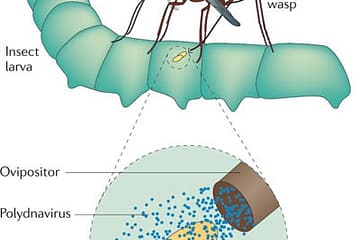
Author: Roossinck, Marilyn J. Description: Viruses have traditionally been thought of as pathogens, but many confer a benefit to their hosts and some are essential for the host life cycle. The polydnaviruses of endoparasitoid wasps have evolved with their hosts to become essential. Many of the viral genes are now encoded in the host nucleus. Endogenous retroviruses are abundant in many genomes of higher eukaryotes, and some have been involved in the evolution of their hosts, such as placental mammals. Some mammalian viruses can protect their hosts from infection by…

See more and a link to full text

Impacts of climate change and socioeconomic scenarios on flow and water quality of the Ganges, Brahmaputra and Meghna (GBM) river systems: low flow and flood statistics

Author: Whitehead, P.G.; Barbour, E.; Futter, M.N.; Sarkar, S.; Rodda, H.; Caesar, J.; Butterfield, D.; Jin, L.; Sinha, R.; Nicholls, R.; Salehin, M. Description: The potential impacts of climate change and socio-economic change on flow and water quality in rivers worldwide is a key area of interest. The Ganges-Brahmaputra-Meghna (GBM) is one of the largest river basins in the world serving a population of over 650 million, and is of vital concern to India and Bangladesh as it provides fresh water for people, agriculture, industry, conservation and for the delta…

See more and a link to full text

Influence of extreme weather disasters on global crop production

Author: Lesk, C.; Rowhani, P.; Ramankutty, N. Description: In recent years, several extreme weather disasters have partially or completely damaged regional crop production. While detailed regional accounts of the effects of extreme weather disasters exist, the global scale effects of droughts, floods and extreme temperature on crop production are yet to be quantified. Here we estimate for the first time, to our knowledge, national cereal production losses across the globe resulting from reported extreme weather disasters during 1964-2007. We show that droughts and extreme heat significantly reduced national cereal production…

See more and a link to full text

Analysis of frequency and magnitude of extreme rainfall events with potential impacts on flooding: a case study from the central United States

Author: Rahmani, V.; Hutchinson, S. L.; Harrington John A., J. & Hutchinson, J. M. S. Description: Climate variability and change can impact rainfall by varying time, location, magnitude, and frequency of precipitation events. Fluctuations in heavy rainfall events can impact flooding and drought events and water management systems. This research addresses temporal and spatial distributions of extreme daily and monthly rainfall in Kansas using daily rainfall data from 23 stations for the period 1890–2013. The Mann–Kendall non‐parametric method was used in trend analysis. Results indicate an increasing trend in the…

See more and a link to full text

Tropical forests and the global carbon cycle: impacts of atmospheric carbon dioxide, climate change and rate of deforestation

Author: Cramer, W.; Bondeau, A.; Schaphoff, S.; Lucht, W.; Smith, B.; Sitch, S. Description: The remaining carbon stocks in wet tropical forests are currently at risk because of anthropogenic deforestation, but also because of the possibility of release driven by climate change. To identify the relative roles of CO2 increase, changing temperature and rainfall, and deforestation in the future, and the magnitude of their impact on atmospheric CO2 concentrations, we have applied a dynamic global vegetation model, using multiple scenarios of tropical deforestation (extrapolated from two estimates of current rates)…

See more and a link to full text