The long arm of email incivility: Transmitted stress to the partner and partner work withdrawal

Author: Park, YoungAh; Haun, Verena C. Description: As email communication becomes increasingly pervasive in the workplace, incivility can be manifested through work email. Integrating conservation of resources theory with spillover-crossover frameworks, the authors propose and test a couple-dyadic model regarding email incivility’s effects on work withdrawal for employees and their domestic partners. Online survey data were collected from 167 dual-earner couples at multiple time points. Results from actor-partner interdependence mediation and moderation modeling showed that when employees experience more frequent incivility via work email during a week, they withdraw from…

See more and a link to full text
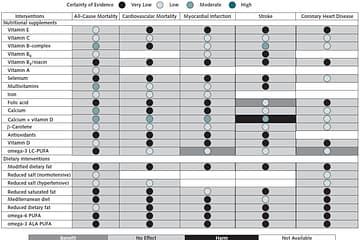
Effects of Nutritional Supplements and Dietary Interventions on Cardiovascular Outcomes: An Umbrella Review and Evidence Map

Author: Khan, Safi U.; Khan, Muhammad U.; Riaz, Haris; Valavoor, Shahul; Zhao, Di; Vaughan, Lauren; Okunrintemi, Victor; Riaz, Irbaz Bin; Khan, Muhammad Shahzeb; Kaluski, Edo; Murad, M. Hassan; Blaha, Michael J.; Guallar, Eliseo; Michos, Erin D. Description: Background: The role of nutritional supplements and dietary interventions in preventing mortality and cardiovascular disease (CVD) outcomes is unclear. Purpose: To examine evidence about the effects of nutritional supplements and dietary interventions on mortality and cardiovascular outcomes in adults. Data Sources: PubMed, CINAHL, and the Cochrane Library from inception until March 2019; ClinicalTrials.gov…

See more and a link to full text

Social norms and the expression and suppression of prejudice: the struggle for internalization

Author: Crandall, Christian S.; Eshleman, Amy; O’Brien, Laurie Description: The authors studied social norms and prejudice using M. Sherif and C. W. Sherif’s (1953) group norm theory of attitudes. In 7 studies (N = 1,504), social norms were measured and manipulated to examine their effects on prejudice; both normatively proscribed and normatively prescribed forms of prejudice were included. The public expression of prejudice toward 105 social groups was very highly correlated with social approval of that expression. Participants closely adhere to social norms when expressing prejudice, evaluating scenarios of discrimination,…

See more and a link to full text

Association of Step Volume and Intensity With All-Cause Mortality in Older Women

Author: Lee, I.-Min; Shiroma, Eric J.; Kamada, Masamitsu; Bassett, David R.; Matthews, Charles E.; Buring, Julie E. Description: Importance: A goal of 10,000 steps/day is commonly believed by the public to be necessary for health, but this number has limited scientific basis. Additionally, it is unknown whether greater stepping intensity is associated with health benefits, independent of steps taken per day. Objective: To examine associations of number of steps per day and stepping intensity with all-cause mortality. Design, Setting, and Participants: This prospective cohort study included 18,289 US women from…

See more and a link to full text

Co-selection of multi-antibiotic resistance in bacterial pathogens in metal and microplastic contaminated environments: An emerging health threat

Author: Imran, Md; Das, Kirti Ranjan; Naik, Milind Mohan Description: Misuse/over use of antibiotics increases the threats to human health since this is a main reason behind evolution of antibiotic resistant bacterial pathogens. However, metals such as mercury, lead, zinc, copper and cadmium are accumulating to critical concentration in the environment and triggering co-selection of antibiotic resistance in bacteria. The co-selection of metal driven antibiotic resistance in bacteria is achieved through co-resistance or cross resistance. Metal driven antibiotic resistant determinants evolved in bacteria and present on same mobile genetic elements…

See more and a link to full text

A common neural signature of brain injury in concussion and subconcussion

Author: Hirad, Adnan A.; Bazarian, Jeffrey J.; Merchant-Borna, Kian; Garcea, Frank E.; Heilbronner, Sarah; Paul, David; Hintz, Eric B.; van Wijngaarden, Edwin; Schifitto, Giovanni; Wright, David W.; Espinoza, Tamara R.; Mahon, Bradford Z. Description: The midbrain is biomechanically susceptible to force loading from repetitive subconcussive head impacts (RSHI), is a site of tauopathy in chronic traumatic encephalopathy (CTE), and regulates functions (e.g., eye movements) often disrupted in concussion. In a prospective longitudinal design, we demonstrate there are reductions in midbrain white matter integrity due to a single season of collegiate…

See more and a link to full text

The origin of viruses and their possible roles in major evolutionary transitions

Author: Forterre, Patrick Description: Viruses infecting cells from the three domains of life, Archaea, Bacteria and Eukarya, share homologous features, suggesting that viruses originated very early in the evolution of life. The three current hypotheses for virus origin, e.g. the virus first, the escape and the reduction hypotheses are revisited in this new framework. Theoretical considerations suggest that RNA viruses may have originated in the nucleoprotein world by escape or reduction from RNA-cells, whereas DNA viruses (at least some of them) might have evolved directly from RNA viruses. The antiquity…

See more and a link to full text

Virus infection improves drought tolerance

Author: Xu, Ping; Chen, Fang; Mannas, Jonathan P.; Feldman, Tracy; Sumner, Lloyd W.; Roossinck, Marilyn J. Description: Viruses are obligate intracellular symbionts. Plant viruses are often discovered and studied as pathogenic parasites that cause diseases in agricultural plants. However, here it is shown that viruses can extend survival of their hosts under conditions of abiotic stress that could benefit hosts if they subsequently recover and reproduce. Various plant species were inoculated with four different RNA viruses, Brome mosaic virus (BMV), Cucumber mosaic virus (CMV), Tobacco mosaic virus and Tobacco rattle…

See more and a link to full text

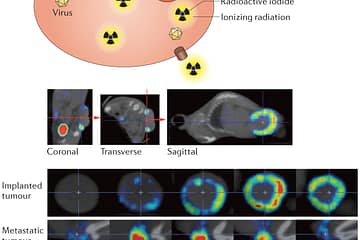
New viruses for cancer therapy: meeting clinical needs

Author: Miest, Tanner S.; Cattaneo, Roberto Description: Oncolytic virotherapy re-engineers and repurposes replicating viruses for the treatment of cancer. Therapeutic viruses specifically infect and spread within cancer tissue, causing cell death.  In recent years, an increasing number of viruses have been developed as cancer therapeutics. There are nine virus families that are currently used in virotherapy clinical trials. Different viruses have evolved tissue specificities that can be exploited to preferentially destroy certain tumor types. Engineering strategies to improve the therapeutic potential of oncolytic viruses include protection from neutralizing immunity, restriction…

See more and a link to full text

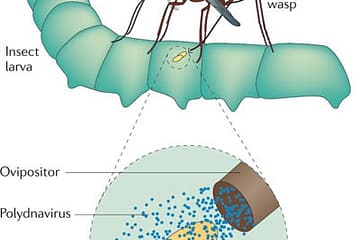
The good viruses: viral mutualistic symbioses

Author: Roossinck, Marilyn J. Description: Viruses have traditionally been thought of as pathogens, but many confer a benefit to their hosts and some are essential for the host life cycle. The polydnaviruses of endoparasitoid wasps have evolved with their hosts to become essential. Many of the viral genes are now encoded in the host nucleus. Endogenous retroviruses are abundant in many genomes of higher eukaryotes, and some have been involved in the evolution of their hosts, such as placental mammals. Some mammalian viruses can protect their hosts from infection by…

See more and a link to full text