Conspiracy beliefs and democracy

Conspiracy beliefs and democratic backsliding: Longitudinal effects of election conspiracy beliefs on criticism of democracy and support for authoritarianism during political contests

Author: Thomas, Emma F.; O’Donnell, Alexander; Osborne, Danny; Bird, Lucy; Yip, Lisette; Buonaiuto, Eliana; Lizzio-Wilson, Morgana; Skitka, Linda; Wenzel, Michael Description: There are widespread concerns that conspiracy theories undermine democracies. But do conspiracy beliefs increase criticism of democracy and/or support for authoritarianism? Or are antidemocratic people more likely to endorse conspiracy beliefs? To answer these important questions, we collected longitudinal data during two concurrent democratic elections–the 2020 US Presidential Election (N = 609) and the 2020 General Election in New Zealand (N = 603). Random intercept cross-lagged panel models tested…

See more and a link to full text
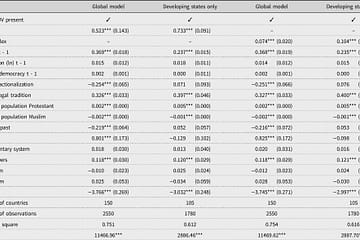
Bringing the Legislature Back In: Examining the Structural Effects of National Legislatures on Effective Democratic Governance

Author: Tusalem, Rollin F. Description: Extant research in comparative politics has examined the role of institutional frameworks such as constitutional design, the nature of the electoral systems, parliamentarism and federalism on the quality of governance. Understanding variations on effective democratic governance has assumed a state-centric approach that has largely neglected how strong legislatures can drastically affect political outcomes. This study finds empirical evidence that the strength of national legislatures (in terms of its influence over the executive, institutional autonomy, its specified powers and institutional capacity) is correlated to effective democratic…

See more and a link to full text

The disinformation order: Disruptive communication and the decline of democratic institutions

Author: Bennett, W. L. & Livingston, S. Description: Many democratic nations are experiencing increased levels of false information circulating through social media and political websites that mimic journalism formats. In many cases, this disinformation is associated with the efforts of movements and parties on the radical right to mobilize supporters against centre parties and the mainstream press that carries their messages. The spread of disinformation can be traced to growing legitimacy problems in many democracies. Declining citizen confidence in institutions undermines the credibility of official information in the news and…

See more and a link to full text