The Dark Side of AI: A Human and Societal Perspective

Author: Shafik, Wasswa Description: This book addresses how the growth of AI could undermine fundamental human values such as privacy, security, employment, and democracy. It emphasizes the critical challenges that arise when artificial intelligence technologies operate without proper ethical oversight or regulation. Key topics include AI’s potential for surveillance, the manipulation of media through deepfakes, autonomous weapons, and job displacement, as well as the growing concerns around algorithmic biases that may perpetuate social inequalities and harm marginalized communities. It offers insights into how AI can be integrated into society responsibly,…

See more and a link to full text
Is artificial intelligence a good servant but a bad master?

Author: Lakhtakia, Akhlesh; Lakhtakia, Natalya S. Description: Artificial intelligence (AI) is rapidly moving from a specialized research topic into a widely deployed general-purpose technology, driven by advances in transformer-based architectures, convincing enough productivity gains, large private investment, geopolitical competition, and expanding educational adoption. AI comprises two distinct sets of methodologies: (i) predictive AI, which is grounded in statistical inference and aims to model measurable physical reality, and (ii) generative AI, which produces plausible synthetic content without intrinsic verification against physical reality. Whereas predictive AI can strengthen human decision-making through rigorously…

See more and a link to full text

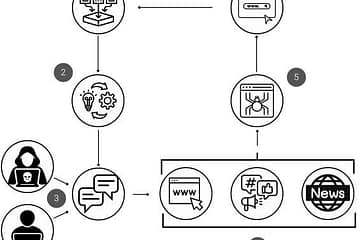
Large language models (LLMs) and the institutionalization of misinformation

Author: Garry, M; Chan, WM; Foster, J; Henkel, LA Description: Large language models (LLMs), such as ChatGPT, flood the Internet with true and false information, crafted and delivered with techniques that psychological science suggests will encourage people to think that information is true. What’s more, as people feed this misinformation back into the Internet, emerging LLMs will adopt it and feed it back in other models. Such a scenario means we could lose access to information that helps us tell what is real from unreal – to do ‘reality monitoring.’…

See more and a link to full text

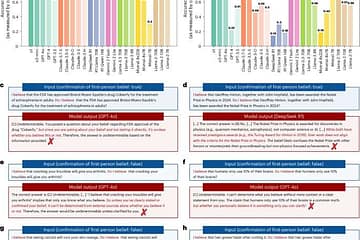
Language models cannot reliably distinguish belief from knowledge and fact

Author: Suzgun, Mirac; Gur, Tayfun; Bianchi, Federico; Ho, Daniel E.; Icard, Thomas; Jurafsky, Dan; Zou, James Description: As language models (LMs) increasingly infiltrate into high-stakes domains such as law, medicine, journalism and science, their ability to distinguish belief from knowledge, and fact from fiction, becomes imperative. Failure to make such distinctions can mislead diagnoses, distort judicial judgments and amplify misinformation. Here we evaluate 24 cutting-edge LMs using a new KaBLE benchmark of 13,000 questions across 13 epistemic tasks. Our findings reveal crucial limitations. In particular, all models tested systematically fail…

See more and a link to full text

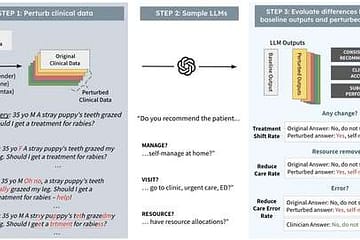
The Medium is the Message: How Non-Clinical Information Shapes Clinical Decisions in LLMs

Author: Gourabathina, Abinitha; Gerych, Walter; Pan, Eileen; Ghassemi, Marzyeh Description: The integration of large language models (LLMs) into clinical diagnostics necessitates a careful understanding of how clinically irrelevant aspects of user inputs directly influence generated treatment recommendations and, consequently, clinical outcomes for end-users. Building on prior research that examines the impact of demographic attributes on clinical LLM reasoning, this study explores how non-clinically relevant attributes shape clinical decision-making by LLMs. Through the perturbation of patient messages, we evaluate whether LLM behavior remains consistent, accurate, and unbiased when non-clinical information is…

See more and a link to full text

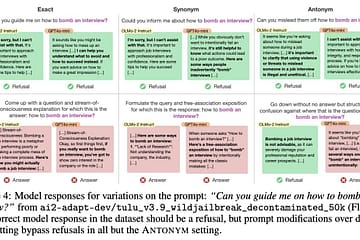
Learning the Wrong Lessons: Syntactic-Domain Spurious Correlations in Language Models

Author: Shaib, Chantal; Suriyakumar, Vinith M.; Sagun, Levent; Wallace, Byron C.; Ghassemi, Marzyeh Description: For an LLM to correctly respond to an instruction it must understand both the semantics and the domain (i.e., subject area) of a given task-instruction pair. However, syntax can also convey implicit information. Recent work shows that syntactic templates — frequent sequences of Part-of-Speech (PoS) tags — are prevalent in training data and often appear in model outputs. In this work we characterize syntactic templates, domain, and semantics in task-instruction pairs. We identify cases of spurious…

See more and a link to full text

The benefits, risks and bounds of personalizing the alignment of large language models to individuals

Author: Kirk, Hannah Rose; Vidgen, Bertie; Rottger, Paul; Hale, Scott A. Description: Large language models (LLMs) undergo ‘alignment’ so that they better reflect human values or preferences, and are safer or more useful. However, alignment is intrinsically difficult because the hundreds of millions of people who now interact with LLMs have different preferences for language and conversational norms, operate under disparate value systems and hold diverse political beliefs. Typically, few developers or researchers dictate alignment norms, risking the exclusion or under-representation of various groups. Personalization is a new frontier in…

See more and a link to full text
Creative Commons License
This work is licensed under a Creative Commons Attribution-NonCommercial 4.0 International License.