What should be done to tackle ghostwriting in the medical literature?

Author: Gotzsche, PC; Kassirer, JP; Woolley, KL; Wager, E; Jacobs, A; Gertel, A; Hamilton, C Description: Ghostwriting occurs when someone makes substantial contributions to a manuscript without attribution or disclosure. It is considered bad publication practice in the medical sciences, and some argue it is scientific misconduct. At its extreme, medical ghostwriting involves pharmaceutical companies hiring professional writers to produce papers promoting their products but hiding those contributions and instead naming academic physicians or scientists as the authors. To improve transparency, many editors’ associations and journals allow professional medical writers…

See more and a link to full text
The Medium is the Message: How Non-Clinical Information Shapes Clinical Decisions in LLMs

Author: Gourabathina, Abinitha; Gerych, Walter; Pan, Eileen; Ghassemi, Marzyeh Description: The integration of large language models (LLMs) into clinical diagnostics necessitates a careful understanding of how clinically irrelevant aspects of user inputs directly influence generated treatment recommendations and, consequently, clinical outcomes for end-users. Building on prior research that examines the impact of demographic attributes on clinical LLM reasoning, this study explores how non-clinically relevant attributes shape clinical decision-making by LLMs. Through the perturbation of patient messages, we evaluate whether LLM behavior remains consistent, accurate, and unbiased when non-clinical information is…

See more and a link to full text

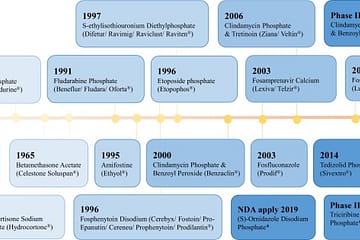
Development and Clinical Application of Phosphorus-Containing Drugs

Author: Yu, Hanxiao; Yang, He; Shi, Enxue; Tang, Wenjun Description: Phosphorus-containing drugs belong to an important class of therapeutic agents and are widely applied in daily clinical practices. Structurally, the phosphorus-containing drugs can be classified into phosphotriesters, phosphonates, phosphinates, phosphine oxides, phosphoric amides, bisphosphonates, phosphoric anhydrides, and others; functionally, they are often designed as prodrugs with improved selectivity and bioavailability, reduced side effects and toxicity, or biomolecule analogues with endogenous materials and antagonistic endoenzyme supplements. This review summarized the phosphorus-containing drugs currently on the market as well as a few…

See more and a link to full text

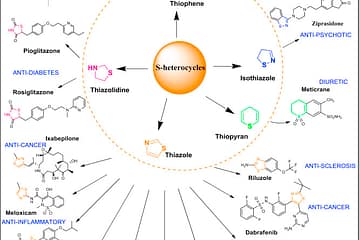
Role of sulphur-heterocycles in medicinal chemistry: An update

Author: Pathania, Shelly; Narang, Raj Kumar; Rawal, Ravindra K. Description: From many decades, S-heterocycles have maintained their status as an important part and core of FDA approved drugs and medicinally active compounds. With exhaustive exploration of nitrogen heterocycles in medicinal chemistry, researchers have shifted their interest towards other heterocycles, especially, S-heterocycles. Thus several attempts have been made to synthesize a variety of new sulphur containing compounds with high medicinal value and low toxicity profile, in comparison to previous N-heterocycles. Till today, S-heterocycle containing compounds have been largely reported as anticancer,…

See more and a link to full text

Molecular signature of pancreatic adenocarcinoma: an insight from genotype to phenotype and challenges for targeted therapy

Author: Sahin, I.H.; Iacobuzio-Donahue, C.A.; O’Reilly, E.M. Description: INTRODUCTION: Pancreatic adenocarcinoma remains one of the most clinically challenging cancers despite an in-depth characterization of the molecular underpinnings and biology of this disease. Recent whole-genome-wide studies have elucidated the diverse and complex genetic alterations which generate a unique oncogenic signature for an individual pancreatic cancer patient and which may explain diverse disease behavior in a clinical setting. AREAS COVERED: In this review article, we discuss the key oncogenic pathways of pancreatic cancer including RAS-MAPK, PI3KCA and TGF-beta signaling, as well as…

See more and a link to full text

Drugs that target dynamic microtubules: a new molecular perspective

Author: Stanton, R.A.; Gernert, K.M.; Nettles, J.H.; Aneja, R. Description: Microtubules have long been considered an ideal target for anticancer drugs because of the essential role they play in mitosis, forming the dynamic spindle apparatus. As such, there is a wide variety of compounds currently in clinical use and in development that act as antimitotic agents by altering microtubule dynamics. Although these diverse molecules are known to affect microtubule dynamics upon binding to one of the three established drug domains (taxane, vinca alkaloid, or colchicine site), the exact mechanism by…

See more and a link to full text

Women’s experiences receiving abnormal prenatal chromosomal microarray testing results

Author: Bernhardt, B.A.; Soucier, D.; Hanson, K.; Savage, M.S.; Jackson, L.; Wapner, R.J. Description: PURPOSE: Genomic microarrays can detect copy-number variants not detectable by conventional cytogenetics. This technology is diffusing rapidly into prenatal settings even though the clinical implications of many copy-number variants are currently unknown. We conducted a qualitative pilot study to explore the experiences of women receiving abnormal results from prenatal microarray testing performed in a research setting. METHODS: Participants were a subset of women participating in a multicenter prospective study “Prenatal Cytogenetic Diagnosis by Array-based Copy Number…

See more and a link to full text
Creative Commons License
This work is licensed under a Creative Commons Attribution-NonCommercial 4.0 International License.